
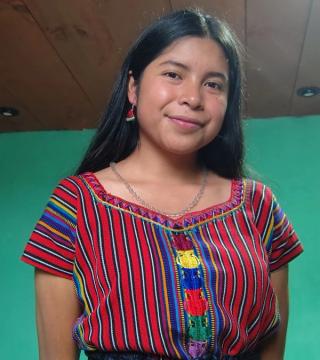
Adela Esther Tuy Tuy
Adela is an Indigenous Maya Kaqchikel communicator from Sololá, Guatemala. She focuses on human rights, climate action, education and gender, using writing and art as tools for expression and social change. She is the author of the poetry collection Keme and has represented youth at United Nations climate conferences over the past two years.
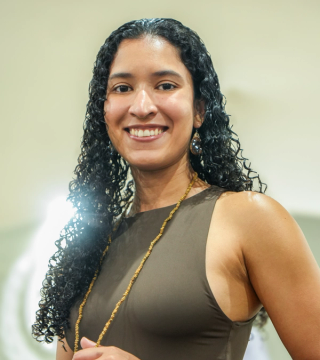
Gabrielle Pompeu Sodré
Gabrielle is a Black and riverside activist from western Bahia, Brazil. She is part of the Movement of People Affected by Dams, where she uses community communication to defend environmental rights and support communities affected by agribusiness and large infrastructure projects. Her work now connects local struggles with international climate advocacy.

Hazel Daniela Muñoz Alpízar
Hazel is a forest engineer and community leader from Bijagua, Costa Rica. She has worked on ecosystem restoration and climate initiatives with rural communities through international cooperation projects. Currently completing a master's degree in Human Development and Ecological Economics, she promotes sustainable development, resilient landscapes and women's leadership in climate action.
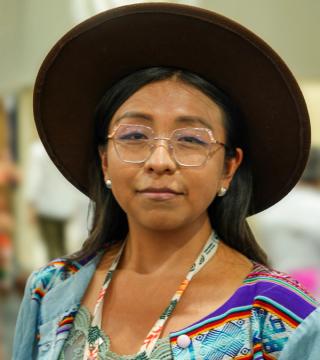
Wara Iris Ruiz Condori
Wara is an Aymara Indigenous leader from Bolivia specialising in climate advocacy, biodiversity and food systems. She founded PANQARAÑA to empower Indigenous women through environmental leadership and journalism. She represents Indigenous youth from South America in international climate spaces, bringing together youth leadership, Indigenous rights and environmental justice.
Briefings
Reports from the LAYCS Fellowship 2026
Post-SB64 - Briefing on Just Transition
Jul 2026
An overview of the just transition negotiations at the UNFCCC's SB64 session. It explores progress on the Just Transition Work Programme and the emerging Just Transition Mechanism, highlighting key debates on finance, governance, and meaningful participation, and what they mean for Indigenous Peoples, Afro-descendant communities, and local communities in Latin America.
Read report →Post-SB64 - Briefing on Adaptation
Jul 2026
An overview of the adaptation negotiations at the UNFCCC's SB64 session. The briefing explains the main outcomes and remaining challenges around the Baku Adaptation Roadmap, the Belém–Addis Vision, and adaptation finance, highlighting what these discussions mean for Indigenous Peoples, local communities, and climate-vulnerable regions in Latin America.
Read report →Position on Adaptation for SB64
Jun 2026
The LAYCS Fellowship's position on climate adaptation for the UNFCCC's SB64 session. Building on the Belém Indicators and the Baku Adaptation Roadmap agreed at COP30, it calls for people-centred adaptation, the integration of Indigenous and ancestral knowledge, and accessible, local adaptation finance.
Read report →Position on Just Transition for SB64
Jun 2026
The LAYCS Fellowship's position on just transition for the UNFCCC's SB64 session. It examines the Just Transition Mechanism established at COP30 in Belém and calls for rights-based governance, better-quality finance that reaches communities, binding social indicators, and territorial consent (FPIC) as a precondition of the transition.
Read report →
Impact report
Learn more about our global impact
Discover how LAYCS delegates are actively shaping local policies and national delegations.
FAQ
Frequently Asked Questions
How do I join a program?
Applications for the LAYCS Scholarship open once a year and are announced on our social media channels and through partner networks. Keep an eye on our Instagram and LinkedIn, or write to info@laycs.org to be notified when the next call opens.
What is the difference between the Scholarship and the Fellowship?
The Scholarship is a one-year program that prepares scholars to participate in UN climate negotiations for the first time, with capacity building, fully funded participation and language justice support. The Fellowship, launched in 2026, is the next step: it accompanies a small group of alumni as they deepen their expertise and build long-term careers in climate policy.
Who can apply?
LAYCS supports young Black, Indigenous and People of Colour leaders from across Latin America who are engaged in climate action in their communities. Each call for applications details the specific criteria for that cohort.
Can I share and use the briefings?
Yes. We publish our policy briefings to make negotiation spaces more accessible to the wider youth movement. You are welcome to read, download and share them — and to reach out via info@laycs.org if you have questions or feedback.